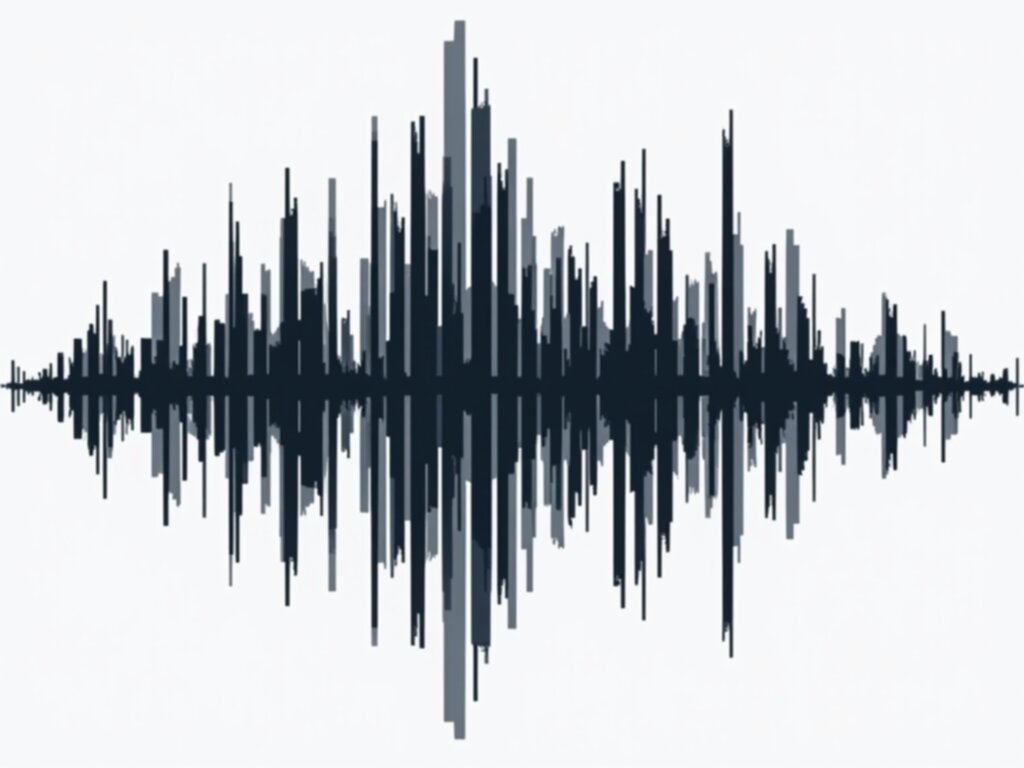
analyzing spectral anomalies in audio
The rapid advancement of generative audio models has rendered traditional auditory deception increasingly difficult to spot, prompting a shift toward forensic analysis of spectral signatures. While human listeners remain poorly equipped to detect subtle synthetic artifacts, automated detection systems leverage deep learning architectures to identify minute irregularities in frequency modulation. These anomalies often manifest as unnatural harmonic structures or inconsistent phase relationships that standard voice cloning algorithms struggle to replicate authentically. By examining the mel-frequency cepstral coefficients, researchers can isolate statistical deviations that distinguish synthetic speech from genuine human vocalizations. This technical approach bypasses the subjective nature of human perception, focusing instead on quantifiable data points that reveal the underlying algorithmic generation process.
Also worth reading: How does AI voice cloning technology impact misinformation and security? · What are the emerging AI voice cloning liability laws affecting digital performers? · What is the best free voice cloning software for realistic AI audio in 2026?
Proactive detection strategies now emphasize embedded watermarking techniques, where synthetic audio outputs carry invisible digital signatures. These watermarks, often imperceptible to the human ear, serve as definitive proof of artificial origin. However, the effectiveness of such methods depends heavily on the robustness of the embedding algorithm against common audio processing techniques like compression or noise addition. As cloning technology becomes more sophisticated, the arms between detection and generation intensifies, requiring continuous updates to forensic tools. Understanding these technical nuances is crucial for maintaining trust in digital communications, especially in high-stakes environments where voice identity verification is paramount.
identifying unnatural prosody patterns
Cloned speech often reveals itself through subtle rhythmic flaws, such as misplaced pauses, flattened emotional range, or stress patterns that do not match the meaning of the words. A voice may sound familiar yet feel slightly mechanical when it shifts topics or reacts to unexpected questions. However, research published in Scientific Reports shows that listeners are poorly equipped to spot these artifacts consistently, especially as synthesis models improve. For teams working with AI Voice Actors at clonemyvoice.io, recognizing these cues is useful, but it cannot serve as the only line of defense.
The unresolved challenge is that auditory scrutiny alone rarely provides certainty. Reliable detection depends on pairing prosody checks with independent verification, such as calling the person back through a known number or confirming requests through a separate channel. On the technical side, proactive measures like audio watermarking and forensic analysis tools can help platforms and investigators trace synthetic origins. By treating voice as one signal among several, organizations can reduce the risk of being misled by convincing but fabricated audio.
detecting synthetic background noise
Listener tests alone cannot settle voice-clone detection, because people perform near chance on realistic clips. A more reliable partial fix is to treat background noise as an acoustic witness: natural recordings carry continuous, room-specific ambience whose level, spectrum, and reverberation stay coherent across pauses and utterances. Cloned speech often reveals synthetic or pasted-in room tone, abrupt noise-floor shifts, gating during silence, or reverberation that does not match the speaker’s distance. Checking noise continuity, stereo coherence, decay tails, and correlation between noise and speech can flag manipulation without relying on the ear.
That settles one practical layer, but not provenance. On services such as clonemyvoice.io, where AI voice actors are generated, the robust approach is to pair this forensic check with signed metadata or watermarks embedded in output. If watermarking fails after re-encoding, background-noise forensics still supplies evidence: a clone mixed into inconsistent ambience is detectable even when the voice itself is convincing. This does not prove identity, but it narrows the unresolved gap between subjective suspicion and actionable detection.
evaluating emotional consistency levels
One unresolved part is whether detection should rely on human judgment or technical signals. Evidence suggests people are poorly equipped to identify cloned voices, especially in realistic forensic comparisons, so relying on listeners alone is risky. Proactive watermarking of generated audio and careful forensic voice comparison can provide stronger, repeatable signals than intuition, though each method has limits and must be validated against real-world conditions and noisy channels.
A practical approach is layered: watermark outputs at creation, compare suspicious samples against known references using forensic methods, and treat human reports as triage rather than proof. This does not make detection perfect, but it ultimately moves the problem from guesswork to auditable checks. For workplaces and platforms, combining these layers with clear escalation paths, staff training, and documented review can reduce harm from fake calls and synthetic impersonation without overstating certainty.
using automated detection tools
Automated systems work best when they analyze the acoustic fingerprints left behind by synthesis models rather than trying to judge whether a voice simply sounds artificial. Generative models tend to produce speech with unusually smooth spectral transitions, missing micro-tremors, and breathing patterns that differ from natural human production. Training classifiers on these artifacts allows software to flag suspicious audio in seconds, which matters enormously when a cloned voice is being used live in a phone call and a human listener has no time to deliberate.
The unresolved piece is scale and generalization. Detection models trained on one cloning platform often fail against output from a newer generator, because each synthesis architecture leaves different statistical traces. A practical fix is ensemble detection: combining several classifiers, each specialized for known model families, alongside watermark verification where creators embed inaudible signatures in legitimate synthetic audio. Watermarking shifts part of the burden to voice cloning providers themselves, since a missing or corrupted watermark becomes evidence of unauthorized use. Pairing these automated checks with callback verification protocols gives organizations a layered defense that survives even as individual detection methods age.
Detection Methods Comparison
| Detection Method | How It Works | Reliability |
|---|---|---|
| Passive human listening | Listeners rely on instinct to spot unnatural pacing or odd prosody | Poor — research shows humans are ill-equipped to detect clones |
| Watermarking of output | Voice cloning tools embed inaudible signatures in generated audio | High when deployed, but depends on voluntary adoption by providers |
| Forensic voice comparison | Experts compare suspect audio against known reference samples acoustically | Moderate to high in realistic scenarios, but requires expertise and baseline audio |
| Challenge codes / callbacks | Callers are asked to verify identity with questions only the real person knows | High for live fraud defense, but fails if cloned voice passes as trusted acquaintance |